
 Español
  Català
  Français
  Italiano
  Portuguese
  Deutsch
  中文
中文  한국어
한국어  日本語
日本語 
Guide to Passeig de Gràcia in Barcelona
Discover Barcelona's Passeig de Gràcia: history, art-nouveau and luxury shopping on one of the city's most iconic avenues.
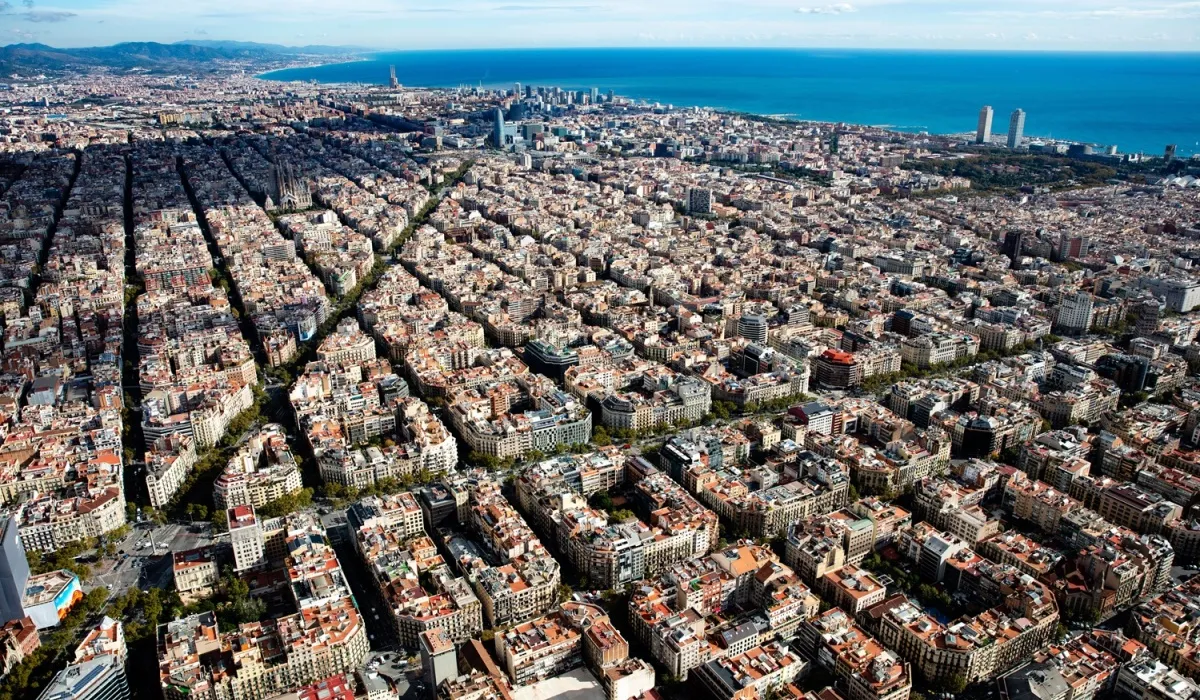
Passeig de Gràcia is Barcelona's most iconic and elegant avenue, as well as one of the world's foremost showcases of architecture. Its 1.6-kilometre length connects the central Plaça Catalunya with Avinguda Diagonal, while also dividing the Eixample district in two: right and left.
This stately avenue was established as a showcase for the Catalan bourgeoisie in the late 19th century and led to the construction of some of the most representative buildings of Catalan Modernisme, among which La Pedrera – Casa Milà stands out.
Today, Passeig de Gràcia is an open-air museum where you can see up close some of the most outstanding works by Antoni Gaudí and other illustrious Barcelona architects. It is also the city's most luxurious shopping street.
Origin and urban transformation of Passeig de Gràcia
The origin of Passeig de Gràcia lies in the old road that connected walled Barcelona with the independent town of Gràcia, now one of the city's districts. With the approval of Ildefons Cerdà's urban plan in 1860, which addressed the need to expand the city beyond its walls, this thoroughfare acquired a central role within the new layout known as the Eixample.
By the late 19th century, the boulevard had become a space for leisure and social display for the city's well-to-do classes. Theatres, cafés, restaurants and commercial establishments were established there, and wealthy families commissioned their residences from the most innovative architects of the time.
Aristocrats and bourgeoisie joined in this building boom, leaving behind the cramped conditions of the old city, and commissioned renowned architects such as Antoni Gaudí, Josep Puig i Cadafalch and Lluís Domènech i Montaner. This initiative transformed Passeig de Gràcia into one of Barcelona's main cultural centres, with buildings that still define the city's image today.
Catalan Modernisme on Passeig de Gràcia
Passeig de Gràcia is home to some of the most outstanding examples of Catalan Modernisme. Architecture, decorative arts and urban furniture coexist in a heritage ensemble of immense artistic value.
Notable modernist buildings
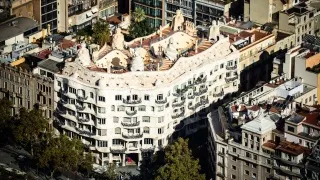
Among the most representative works is La Pedrera – Casa Milà, built by Antoni Gaudí on commission from Roser Segimon and Pere Milà. Located at number 92 on Passeig de Gràcia, its monumental structure of curved lines mimics a natural quarry, enclosed by spectacular wrought-iron balustrades on the balconies and crowned by a roof full of sculptural chimneys.
Another of the emblematic spots is the so-called Illa de la Discòrdia (‘Block of Discord’), between the streets of Consell de Cent and Aragó, which brings together buildings by three great Modernisme architects with very different and eye-catching aesthetic languages.
Casa Batlló, also by Gaudí, is the best known of them. It is distinguished by its undulating façade clad in trencadís, mimicking the sea, iron and stone balconies shaped like masks, and a roof that evokes a large scaly creature, which many say is Saint George's dragon. The main floor, with large oak doors featuring organic forms and coloured glass, opens directly onto Passeig de Gràcia.
Adjacent is Casa Amatller, remodelled by Josep Puig i Cadafalch for the chocolatier Antoni Amatller. The building combines references to Catalan Gothic with influences from the architecture of traditional houses in Flanders, which are particularly visible in the stepped crowning of the façade. It also incorporates allegorical motifs by the sculptor Eusebi Arnau that refer to the owner family and elements of Catalan culture.
Completing the ensemble is Casa Lleó Morera, the work of Lluís Domènech i Montaner, with a spectacular stone balcony carved with floral motifs, lions and mulberry trees, alluding to the family's surname. Its notable ornamental richness is the result of the work of the best artisans of the period, such as the sculptors Eusebi Arnau and Alfons Jujol, as well as other stained-glass artists and mosaicists.
Other notable buildings on Passeig de Gràcia include Casa Fuster, also by Domènech i Montaner, which was one of the architect's last works and is recognisable by its refined neo-Gothic style. Casa Pascual i Pons, designed by Enric Sagnier, is strategically located directly opposite Plaça Catalunya and is distinguished by the two pointed towers that crown it. Finally, there is the Casa Ramon Casas by the architect Antoni Rovira i Rabassa, which was the residence of the famous modernist painter of the same name, featuring excellent stone, wood and wrought-iron work. For many years, it housed the famous Vinçon furniture and design shop.
Urban design and decorative elements
The art of Passeig de Gràcia is not just on the walls but is also found beneath your feet and in the streets. Pere Falqués's bench-lamps, designed in 1906, are one of its most characteristic symbols. They combine a stone bench covered in white ceramic trencadís with a wrought-iron lamp, creating a piece that is both functional and ornamental.
The hexagonal paving slabs attributed to Gaudí, inspired by shapes from the marine world, are also particularly well-known. This paving has become an icon of Barcelona's urban design. One of its most curious features is that it does not form a complete picture on its own; you need to join seven pieces to see the full design.
In addition to the grand façades, a stroll along Passeig de Gràcia allows you to admire stained glass, marquetry, sculptures and ornamental details that exemplify the artisanal genius so characteristic of Catalan Modernisme.
Luxury shopping and urban life
From its inception, Passeig de Gràcia has been linked to Barcelona's commercial and social life. The first businesses and shops were established here: fashion boutiques, cafés, car dealerships, art galleries, food shops, photography studios, jewellers and furniture shops, among many others.
Some of the first brands that helped to consolidate this commercial prestige were Furest (which at the time dressed the Spanish Royal House), Loewe, Joiers Bagués, Sastrería Bel, Fotografia Audouard and the Café Torino, a pioneer of vermouth in Barcelona.
Over time, the promenade has become one of Barcelona's main commercial thoroughfares, especially in the fashion and jewellery sectors. Today, some of the major international brands such as Chanel, Cartier, Tiffany's and Valentino can be found there. These shops coexist with hotels, restaurants and cultural spaces, keeping Passeig de Gràcia as one of the city's most active thoroughfares.
In addition to its architectural heritage, the avenue is the setting for a variety of local events and festivals, such as the Barcelona Shopping Night, the Christmas illuminations, the La Mercè Festival, and the book and rose stalls on 23 April, Sant Jordi.
A visit to Passeig de Gràcia, an essential tour to understand Barcelona
A tour of the Passeig de Gràcia allows you to understand the architectural, social and urban development of Barcelona between the 19th and 20th centuries. The concentration of cultural facilities, modernist buildings and historic shops makes it one of the busiest areas in the city, for both visitors and Barcelonans alike.
Strolling between modernist façades and century-old establishments allows you to see how the city developed a new way of understanding urban space and cultural life just over a century ago.
It is easily accessible by metro, via lines L2, L3 and L4 (Passeig de Gràcia station) and L3 and L5 (Diagonal station). It is also served by Ferrocarrils de la Generalitat and several train lines. The route can be done entirely on foot, from Plaça Catalunya to the Avinguda Diagonal.
Más curiosidades