Español
 Català
 Français
 Italiano
 Portuguese
 Deutsch
 中文
 한국어
 日本語

Barcelona, a UNESCO World Heritage Site
Barcelona is a world benchmark in architecture. Discover all the city’s monuments that have been declared UNESCO World Heritage Sites.
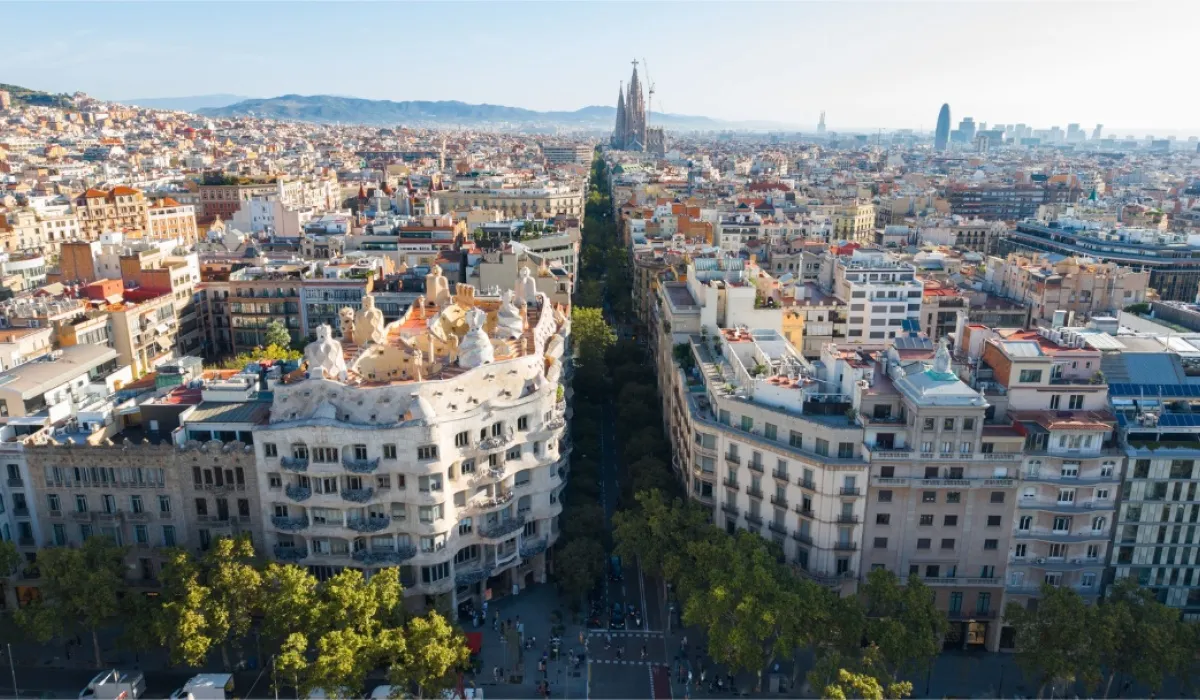
The city of Barcelona preserves one of the world's most unique architectural legacies. The works of architects Antoni Gaudí and Lluís Domènech i Montaner form part of the UNESCO World Heritage List, which recognises cultural sites of outstanding universal value.
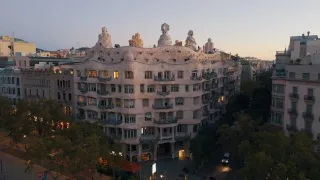
This recognition highlights the contribution of Catalan Modernisme to the history of architecture and the importance of preserving it as a shared heritage of humanity. La Pedrera – Casa Milà has also formed part of this milestone since 1984.
Below, we explain the criteria for inclusion on the UNESCO World Heritage List and which other architectural landmarks in Barcelona hold this distinction, alongside La Pedrera.
What does being a UNESCO World Heritage Site mean?
UNESCO works, among other areas, to promote the protection of cultural and natural heritage of worldwide significance. The 1972 World Heritage Convention sets out the criteria used to identify properties representing an exceptional legacy for humanity.
Inclusion on the World Heritage List requires demonstrating outstanding universal value and meeting at least one of the ten criteria established by UNESCO, such as representing a masterpiece of human creative genius or being an outstanding example of a type of building, architectural or technological ensemble, or landscape.
It is also mandatory to ensure the appropriate protection and management of each site to preserve its characteristics over time.
Being inscribed on this list is therefore far more than an honorary distinction. It entails a commitment to conserve the monuments, study them in depth, and pass on their knowledge to future generations.
UNESCO World Heritage Sites in Barcelona
Barcelona's UNESCO-recognised architectural heritage is structured around two official inscriptions encompassing various sites across the city.
-
The first corresponds to the Works of Antoni Gaudí, which were initially inscribed in 1984 and extended in 2005.
It comprises a total of seven structures: Park Güell, Palau Güell, Casa Milà, Casa Vicens, Casa Batlló, the Nativity façade and crypt of the Sagrada Família, and the crypt of the Colònia Güell, the latter located in Santa Coloma de Cervelló, outside Barcelona. This ensemble illustrates the evolution of Gaudí's architectural language and his drive to integrate structure, ornamentation, materials, craftsmanship, and organic forms.
-
The second includes the Palau de la Música Catalana and the Hospital de Sant Pau, inscribed as World Heritage in 1997. These two works by Lluís Domènech i Montaner exemplify architecture's ability to address the cultural and social needs of its environment.
The Palau stands out for its integration of the decorative arts and natural light into a venue dedicated to music. The Hospital de Sant Pau, meanwhile, is renowned for its innovative design of a hospital facility, complete with gardens and spaces dedicated to patient wellbeing.
Together, these monuments reflect a period of extraordinary architectural creativity in Catalonia and explain why Catalan Modernisme occupies a prominent place in global cultural heritage.
Casa Milà, a World Heritage Site since 1984
La Pedrera – Casa Milà was one of the first architectural works in Barcelona to be recognised by UNESCO, alongside Park Güell and Palau Güell, back in 1984.
This international accolade marked the culmination of decades of heritage protection: Casa Milà had already been included in Barcelona's artistic heritage catalogue in 1962 and designated a Monument of National Interest in 1969.
La Pedrera's distinctive nature even led to administrative consequences. During its construction, the attic and the rooftop exceeded the volume permitted by municipal bylaws at the time. Nevertheless, in 1909, Barcelona City Council officially acknowledged the building's monumental character and resolved that it did not need to adhere strictly to local ordinances like other buildings in the city.
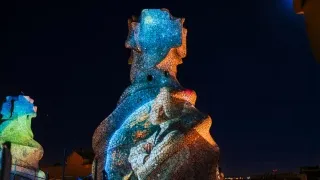
This architectural uniqueness is apparent throughout Casa Milà: in the curves of the façade, the structural solutions, the layout of the interior spaces, and the sculptural elements of the rooftop... All of it reflects Gaudí's relentless pursuit of innovation and his genius for blending technical mastery with artistic expression.
Casa Milà thus represents an innovative approach to residential architecture and the harmony between spatial design and decorative arts. This pioneering contribution is precisely one of the primary reasons behind UNESCO's recognition.
Barcelona: architectural heritage of universal value
The works of Gaudí and Domènech i Montaner inscribed on the World Heritage List are testament to the cultural vitality and urban transformation of Barcelona between the late 19th and early 20th centuries. During this era, architecture became a sphere of experimentation where modern building techniques and materials flourished alongside diverse decorative arts and master craftsmanship.
The UNESCO recognition of Casa Milà highlights both its rarity and uniqueness, as well as its profound contribution to the history of architecture. It also holds a pre-eminent place among the wider legacy of Gaudí's works.
Preserving UNESCO-listed heritage demands continuous conservation, research, study, and cultural dissemination. However, this commitment goes far beyond international recognition. Casa Milà and the city's other monuments form an intrinsic part of Barcelona's collective memory and represent a shared heritage to be protected and shared with everyone.
More news