

 Español
 Català
 Français
 Italiano
 Portuguese
 Deutsch
 中文
 한국어
 日本語

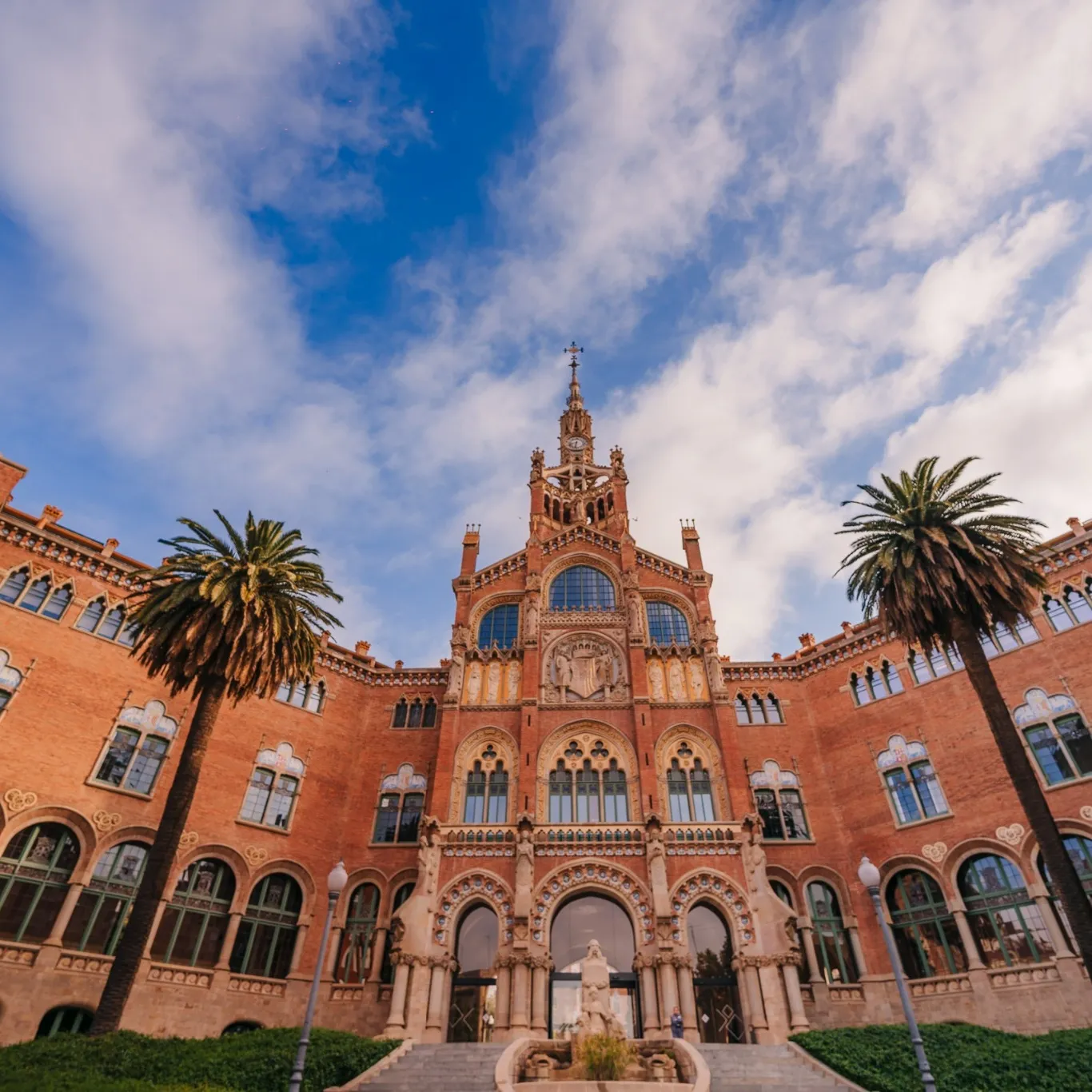
Sant Pau Art Nouveau Site
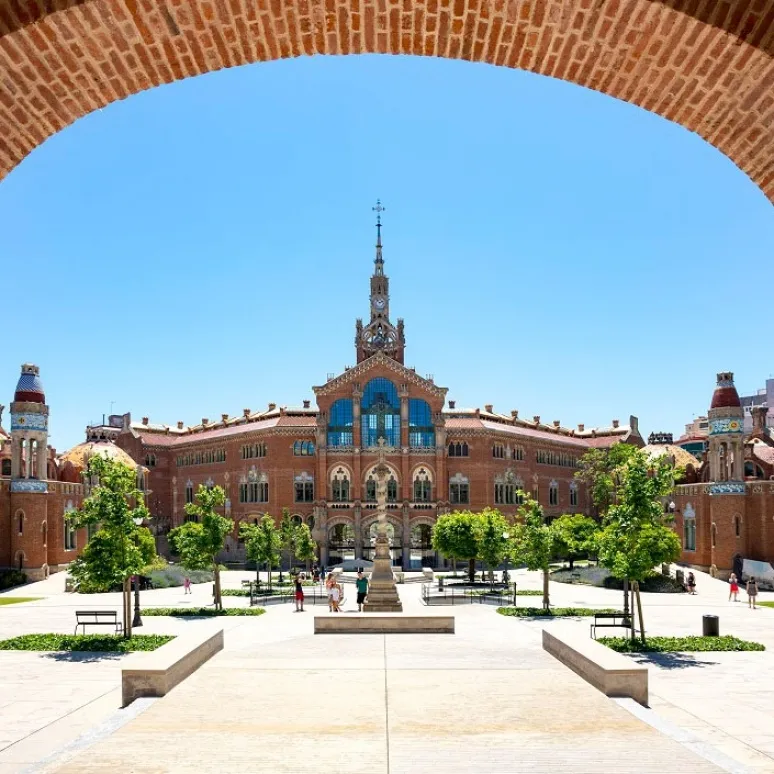
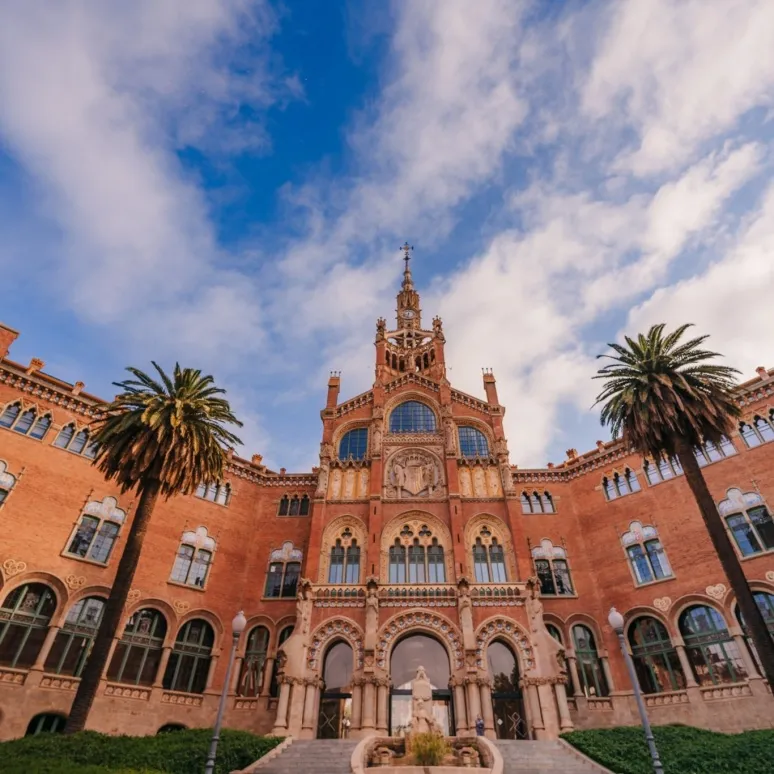
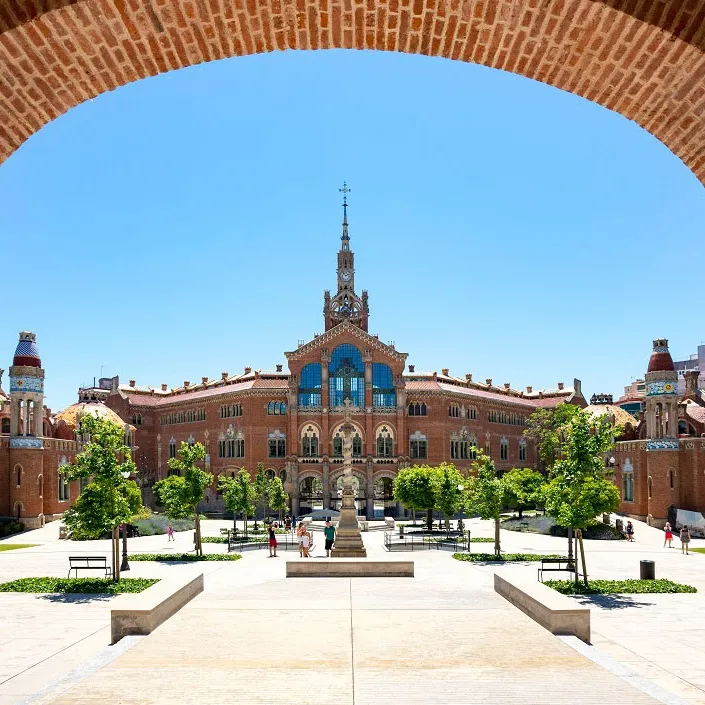
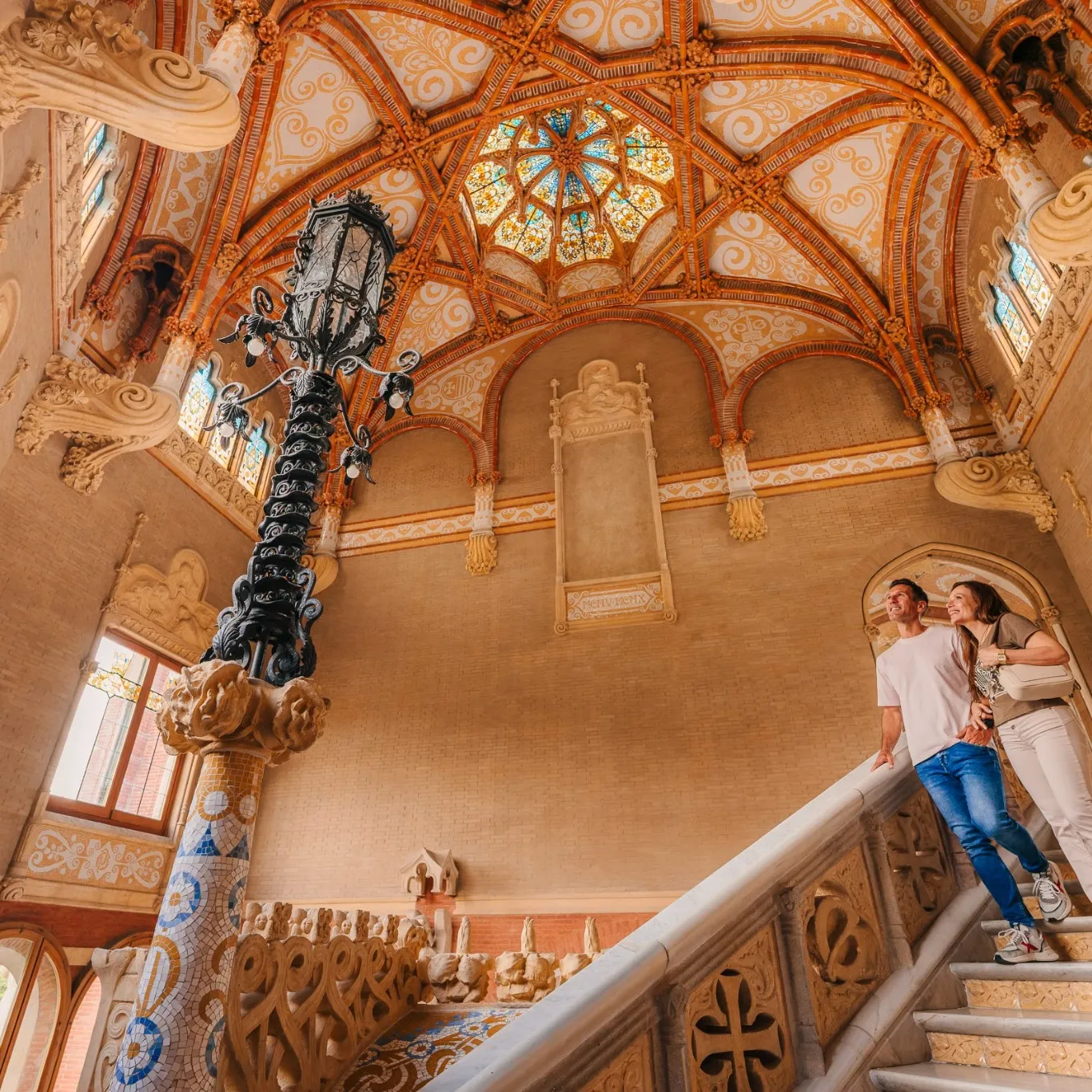
The Sant Pau Art Nouveau Site is one of the masterpieces of Lluís Domènech i Montaner and one of the most remarkable ensembles of Catalan modernisme in Barcelona. Designed as a modern hospital, it brings together garden-surrounded pavilions, innovative healthcare solutions and extraordinary artistic wealth. Declared a UNESCO World Heritage Site in 1997, the site unites architecture and decorative arts in a true total work of art.
Year of construction
1902-1930
Location
Carrer de Sant Antoni Maria Claret, 167, 08025 Barcelona
History of the Sant Pau Art Nouveau Site
Lluís Domènech i Montaner (1849–1923), architect, historian, politician, and intellectual, is one of the leading figures of Catalan Art Nouveau (Modernisme). His work is distinguished by the integration of architecture and the decorative arts, conceived as inseparable parts of a unified and harmonious whole.
The present-day Sant Pau Art Nouveau Site, one of the most remarkable landmarks of Catalan Modernisme in Barcelona, originated in the project for the Hospital de la Santa Creu i Sant Pau. It was made possible by the bequest of the banker Pau Gil i Serra, who lived in Paris and, upon his death in 1896, left a substantial portion of his estate to build a modern hospital in Barcelona. The commission was entrusted to Domènech i Montaner, who devised an innovative scheme from both an architectural and medical standpoint. To achieve this, he studied over two hundred hospitals worldwide, examining their various layouts along with patient wellbeing, natural and mechanical ventilation, lighting, sunlight exposure, hygiene, circulation routes, medical equipment, heating, and auxiliary services.
The architecture of Sant Pau: pavilions, gardens, and underground tunnels
The result was a hospital complex designed according to the most advanced hygienic principles of the period, made up of freestanding pavilions set within gardens and linked by a network of underground tunnels that allowed staff, patients, and supplies to move freely without disrupting clinical activities on the surface.
Sant Pau and the Sagrada Família: a dialogue across Barcelona's Eixample
The complex spans the equivalent of nine Eixample city blocks and is aligned diagonally across the orthogonal grid planned by Ildefons Cerdà. This distinctive orientation addressed both urban and sanitary considerations: the forty-five-degree rotation ensured an optimal north-south orientation for the pavilions, enhancing natural light and ventilation, while aligning the site’s main axis with what is now Avinguda de Gaudí. In doing so, Domènech i Montaner created a direct visual link between two of modern Barcelona's greatest monuments: the Sagrada Família and the Hospital de Sant Pau, conceived as complementary landmarks within a unified vision of the city.
The decorative arts at Sant Pau: ceramics, mosaics, and Art Nouveau sculpture
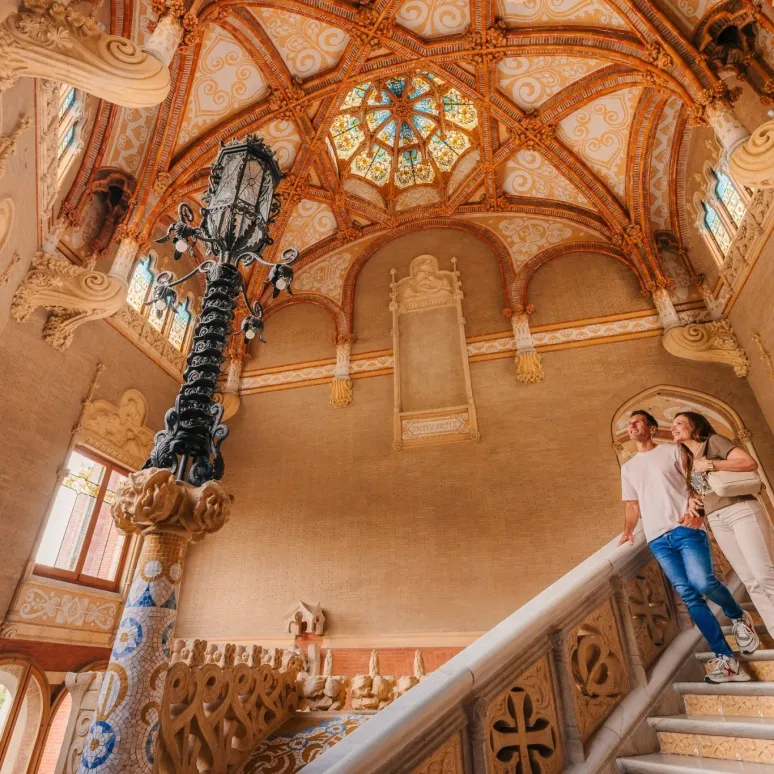
The complex is renowned for its extraordinary artistic wealth, featuring a rich array of architectural solutions and lavish decoration based on ceramic tiling, mosaics, frescoes, and floral and heraldic motifs, creating an ensemble of outstanding chromatic vibrance and artistic value.
This richness also owes much to the involvement of some of the era's foremost artists. Pau Gargallo sculpted the figures on the façade of the Administration Building and the former auditorium; Aleix Clapés painted the panels depicting the translation of the relics of Saint Eulalia; and Francesc Labarta and Mario Maragliano crafted the polychrome mosaics and ceramic murals depicting the history of the hospital. The collaboration of these masters, alongside highly skilled craftspeople, turned the Sant Pau Art Nouveau Site into a true Gesamtkunstwerk—a total work of art in which architecture, sculpture, painting, mosaic, and ceramics blend seamlessly.
This masterly synthesis of architecture, decorative arts, and medical innovation makes the Sant Pau Art Nouveau Site one of the masterpieces of Catalan Modernisme and one of the most distinctive heritage ensembles in Barcelona.
The Sant Pau Art Nouveau Site, a UNESCO World Heritage site
The Hospital de la Santa Creu i Sant Pau was declared a Historical-Artistic Monument in 1978. Together with the Palau de la Música Catalana, it stands among Lluís Domènech i Montaner’s finest achievements, inscribed on the UNESCO World Heritage list since 1997—a distinction that attests to its exceptional significance within the architectural heritage of Barcelona and Catalan Modernisme.
Visit La Pedrera and the

The most prominent Catalan modernisme buildings
Palau de la Música Catalana
Sant Pau Art Nouveau Site