

 Español
  Català
  Français
  Italiano
  Portuguese
  Deutsch
  中文
中文  한국어
한국어  日本語
日本語 
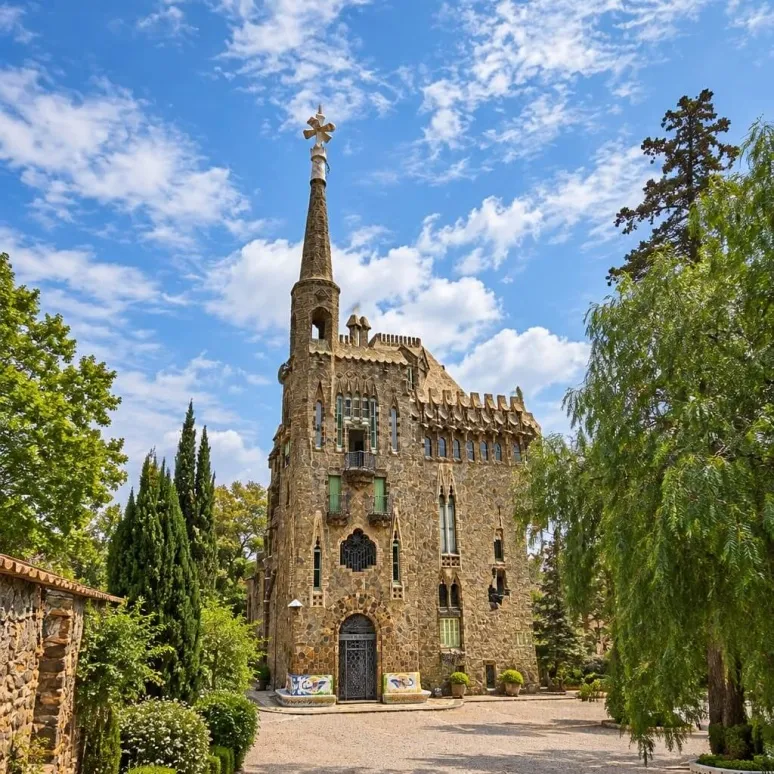
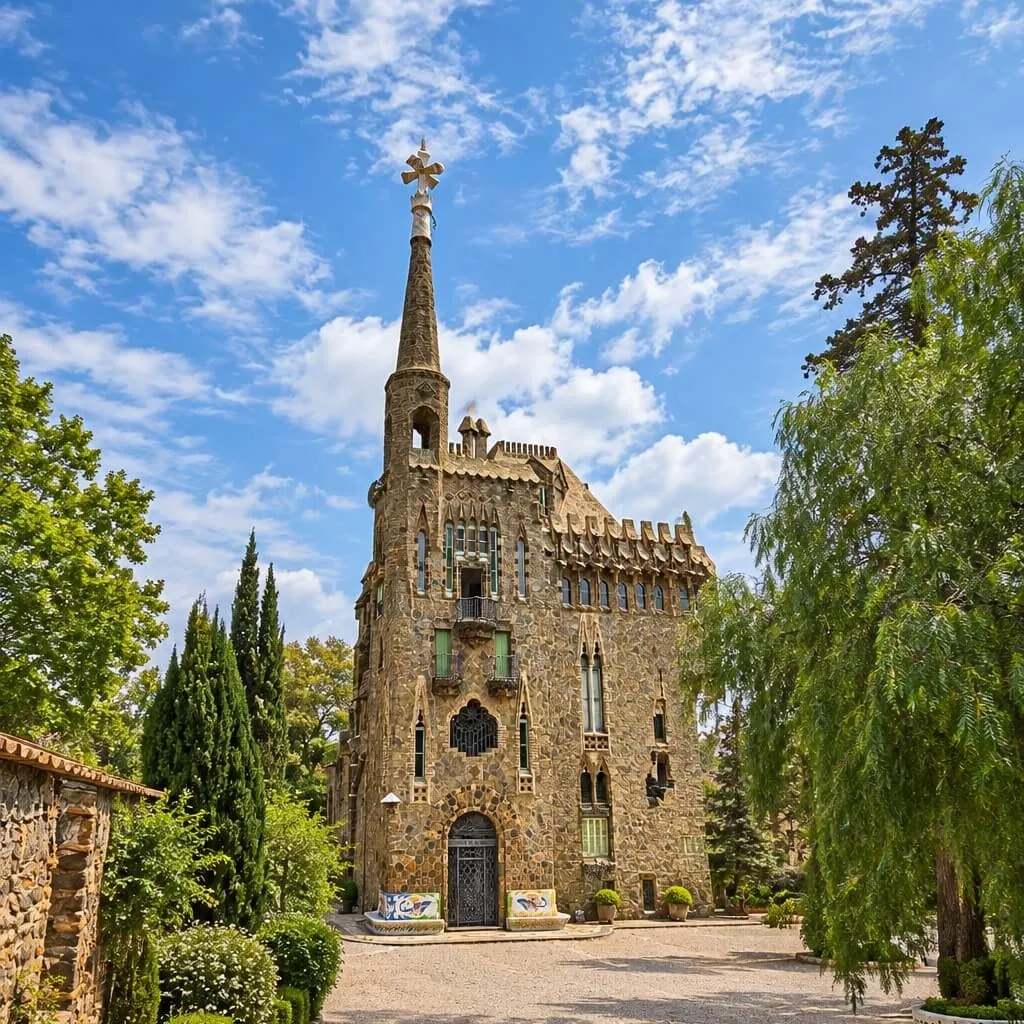
Discover one of Gaudí’s greatest masterpieces.
Bellesguard Tower
The Bellesguard Tower is one of Antoni Gaudí’s most unique works in Barcelona. Located at the foot of the Collserola mountain range, it stands on a site closely tied to Catalan medieval history, over the ruins of the former castle of King Martin I the Humane, the last monarch of the House of Barcelona. It was he who named the area 'Bellesguard' (Beautiful View) thanks to its panoramic views over Barcelona.
This historical heritage played a fundamental role in Gaudí's project, in which he reinterpreted Gothic architecture, transforming it through the ingenious structural and decorative solutions of his unmistakable personal style.
Year of construction
1900 – 1909
Location
Carrer de Bellesguard, 16-20, Barcelona
History of Torre Bellesguard
Torre Bellesguard, also known as Casa Figueras, is a single-family residence built between 1900 and 1909 on the site where the residence of King Martin the Humane once stood.
In 1408, Bellesguard became a royal and papal seat, and the monarch established his residence here during the final years of his life. Of that ancient royal palace, only a few ruins remained, which were integrated into the new architectural project. The history of Bellesguard is intimately linked to that of Catalonia and served as a constant source of inspiration for the design.
When Gaudí designed the residence, he took this past as his starting point. In this way, the architecture of Torre Bellesguard creates a dialogue between the site’s heritage and early 20th-century Catalan Modernism.
Torre Bellesguard has been protected as a Historic-Artistic Monument (BCIN status) since 1969.
The architecture of Torre Bellesguard: between Gothic and Catalan Modernism
The architecture of Torre Bellesguard stands between the Gothic tradition and Catalan Modernism. Its appearance evokes a castle with its battlements, wall walk and Gothic-inspired windows.
This reinterpretation of medieval architecture is not a mere copy of the past, but a personal reading through which Gaudí transformed historical memory into thoroughly modern architecture.
Torre Bellesguard features a square floor plan and a cubic volume distributed over five levels. Although primarily built of brick, the exterior is clad with local slate stone. This choice reflects the desire to integrate the building with the surrounding geology and topography, a hallmark of Gaudí’s architecture.
The tower and the symbolism of the façade
Among its most characteristic features is the slender tower crowned by a spire clad in trencadís and a four-armed cross that incorporates a depiction of the Catalan flag (senyera).
Another striking feature is the wall walk running along all four façades, an architectural solution that would later be developed in other works by the architect, such as La Pedrera.
The Star of Venus
At the centre of the main façade is the rose window known as the ‘Star of Venus’, a unique example of a three-dimensional stained-glass window. Its symbolic significance reflects the intention to link the residence to the site’s historical past, establishing a dialogue between the contemporary construction and the medieval remains preserved in the gardens.
Among the various interpretations of this feature, it has been associated with Venus and the figure of the Virgin Mary, as well as with the wedding of King Martin the Humane and Margaret of Prades, celebrated at Bellesguard in 1409.
The Attic and structural innovation
The Attic is one of the most distinctive spaces in Torre Bellesguard. Its structure of brick arches and partitions lightens the load of the roof while creating an interior of remarkable architectural strength. This solution demonstrates Gaudí’s ability to combine functionality, technical innovation and formal expression within a single work.
The legacy of Torre Bellesguard
Torre Bellesguard holds a unique place within Antoni Gaudí’s work. Its deep connection to the history of Catalonia, the reinterpretation of Gothic architecture and its innovative construction make it one of the most personal and symbolic creations in his oeuvre.
